


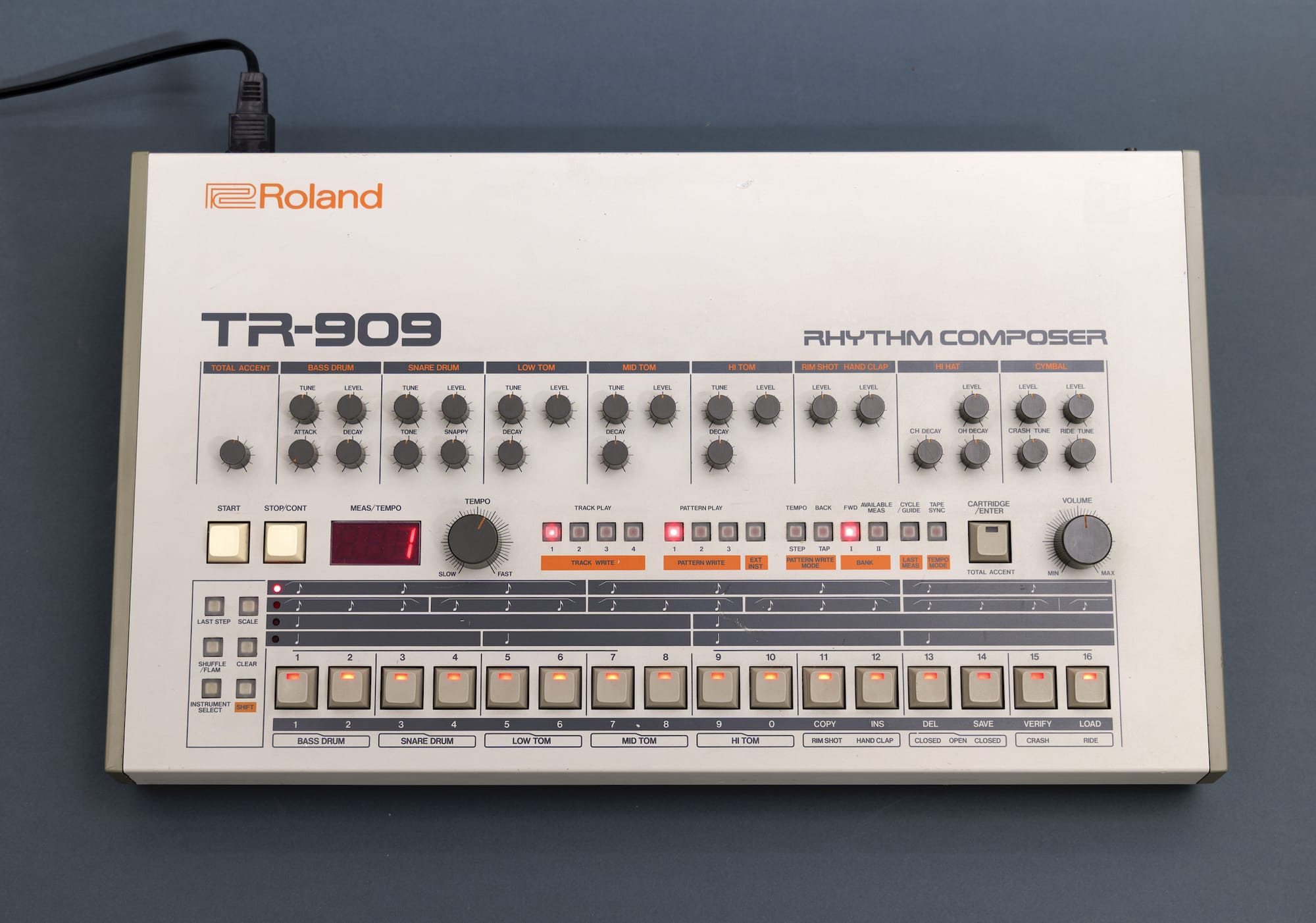
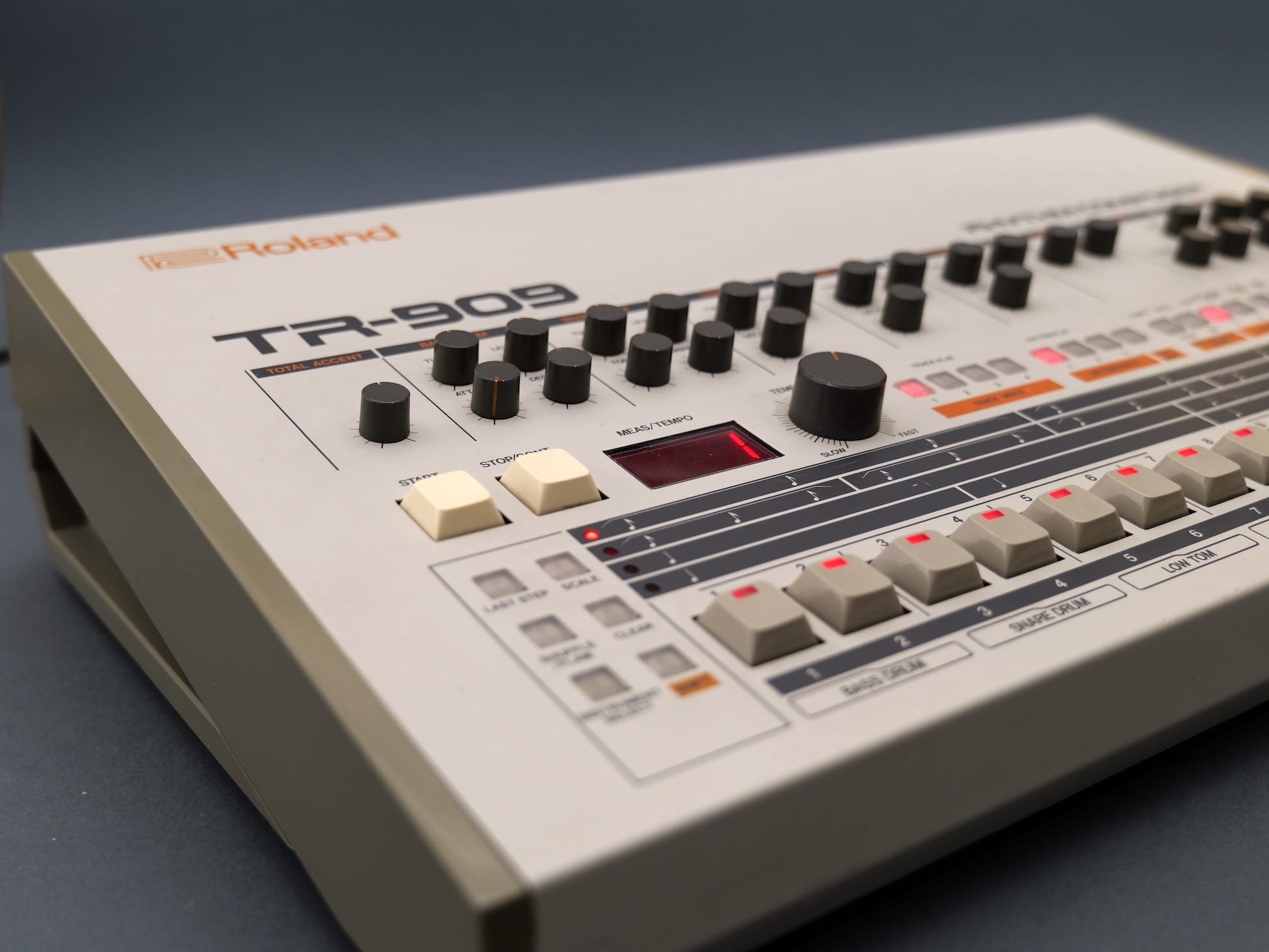
The Roland TR-909 Rhythm Composer is “a fully programmable rhythm machine with various attractive functions”… or so the first page of the manual tells us. Those attractive functions went on to inspire a generation of techno artists, pop producers, and electronic musicians of every stripe, giving the 909 a status perhaps only second to Roland’s other legend, the TR-808.
 BJOOKS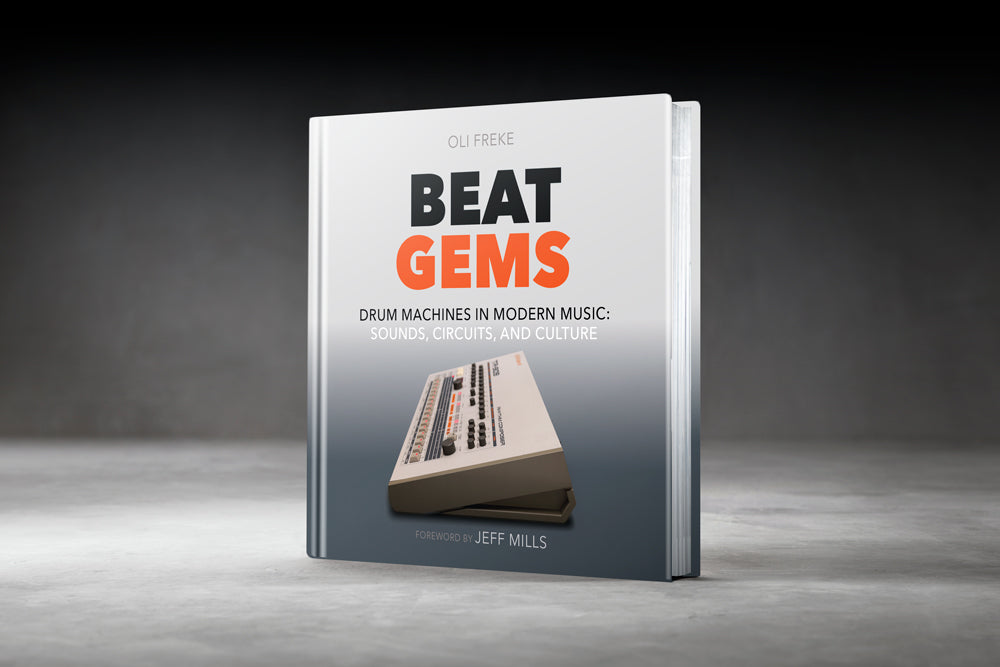
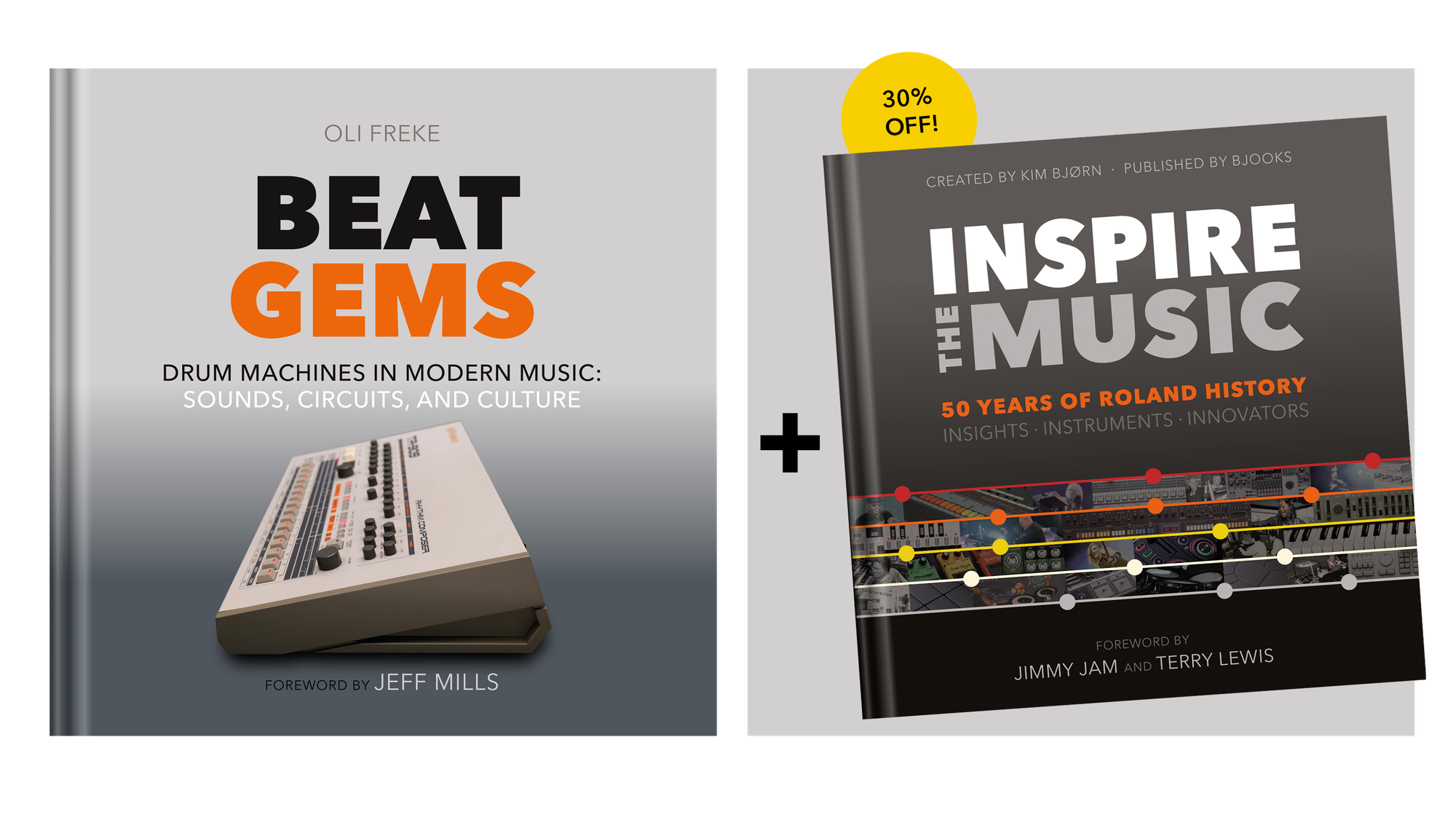
Get 30% off INSPIRE THE MUSIC when you buy BEAT GEMS: Use the code 909DAY
Though it seems extraordinary now, like the 808 before it, the 909 was a failure at launch – but even more so. The 808 at least managed a three-year production run, but the 909 was discontinued within a year. This was a major disappointment for lead designer Tadao Kikumoto, who later reflected that it was “another failure; expensive and less realistic compared to many PCM drum machines.” Just as much effort had gone into the TR-909 as the 808, but the market wasn’t ready to love a machine that didn’t match the standards set by the LinnDrum, Drumtraks, or Drumulator.
First impressions were so bad that even the godfather of techno, Juan Atkins, returned his first unit to the shop. (He reconsidered soon enough!) Despite the bumpy start, the 909 – decades after its launch – is as much a cornerstone of modern music as the 808, and when word of that success filtered back to the Roland design team in the early 1990s, they were both pleasantly surprised and genuinely baffled. Yesterday’s failure became today’s success?
Roland’s drum-synth ambitions
After launching the all-analog TR-808 in 1980 and the TR-606 in 1981, Roland founder Ikutaro Kakehashi understandably wanted a digital drum machine next, having seen the success of American machines. However, once they considered the cost of expensive digital memory and unfavorable exchange rates, it was clear an all-digital unit wasn’t feasible. Kikumoto still harbored dreams of a “complete analog drum synthesizer,” but the 909 would fall short of that vision, too.
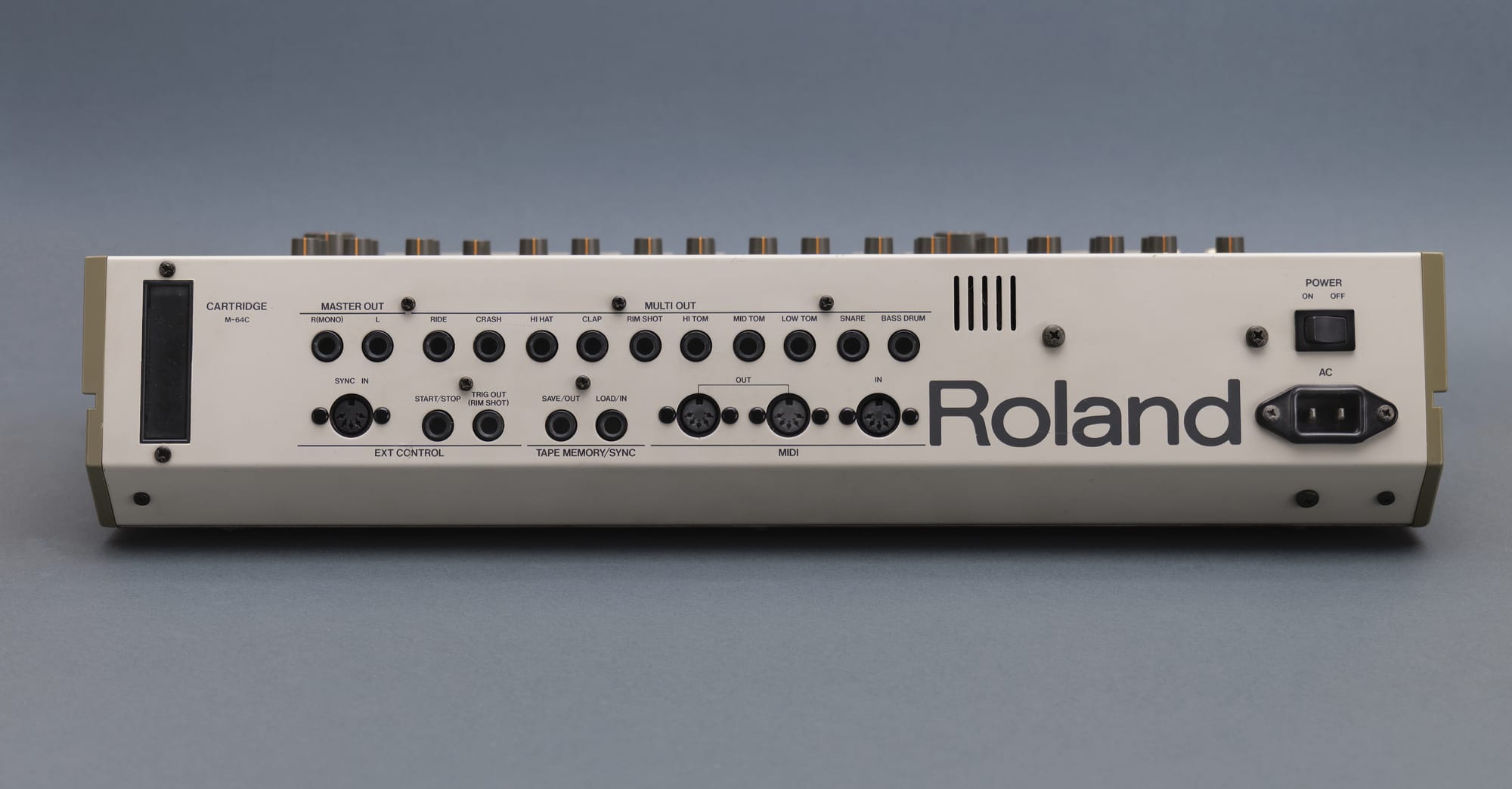
Partway through development, the team had to accept a basic reality about analog synthesis – it simply can’t make the sounds of convincing metallic instruments; the physics are too different. The compromise was clever – make a hybrid machine, analog for the main drums and digital for the hi-hats and cymbals. To keep memory costs down, the sounds are companded 6-bit samples, shaped downstream with analog envelopes and filters – not as realistic as a LinnDrum, but full of character.
Sounds good
Ultimately a drum machine succeeds or fails on the quality of its sounds. The machine needs to be easy to program and supported by pro-level features, but even the slickest shuffle is meaningless if the sounds aren’t good enough.
As it was, the 909’s palette turned out to be uniquely suited to club systems and the dance music that emerged in the mid-1980s, such as electronic body music and techno: harder, tougher sounds, with a musical emphasis on the rhythm section. Plenty of other machines contributed to the emerging style of techno, but the 909 became its defining instrument.
BJOOKSGet 30% off INSPIRE THE MUSIC when you buy BEAT GEMS: Use the code 909DAY
The 909’s bass drum is analog, but very different from the 808’s boom, which is created by a resonant filter. Based around a more synth-like circuit, the pitched core of the sound is a fast downward sweep (“down-chirp”) of a waveshaped sawtooth that creates the transient and body. This is augmented by a click-pulse and burst of noise to mimic the beater on skin. Following Kikumoto’s desire to make a true drum synthesizer, the front panel features control knobs for Attack (click level), Decay, and Tune (pitch-sweep range).
The snare drum comprises two tuned oscillators for the body and a burst of noise for the crack. The Tone control adjusts the base pitch; Snappy controls the noise level; and Decay controls the length. These allow anything from a dry, woody knock to the classic whiplash snare heard on a thousand records.
The toms (low/mid/high) are solid. Sound generation is similar to the kick, so they have real punch and, like the kick, benefit from Roland R&D’s research into the important transient portion of percussive sounds. Fully tunable, they can be matched to a track for harmonic alignment or sequenced as a pseudo-bassline – a common techno technique.
The last of the machine’s analog sounds are the rim and handclap. They are both lower in pitch and fuller than the 808; the handclap follows Roland’s familiar “multi-tap” design.
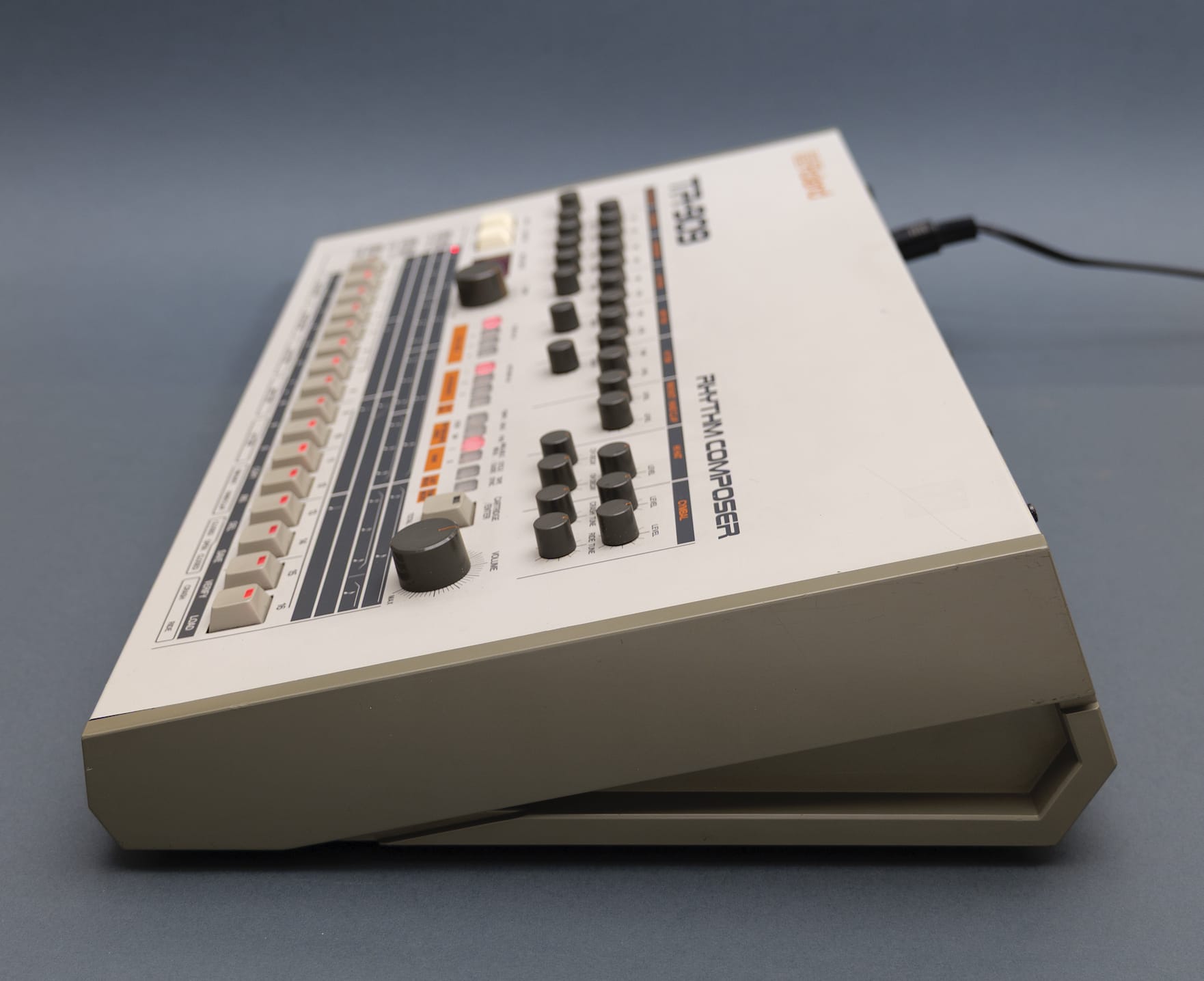
The hi-hats, crash, and ride cymbals are 6-bit PCM samples, run through an analog VCA and filter, ensuring that the overall tone fits with the rest of the machine. Closed hat chokes the open hat, providing that familiar techno and house groove.
Atsushi Hoshiai – one of the key 909 engineers, and himself a drummer – has spoken of his selection of cymbals: a Paiste crash cymbal and a mismatched Paiste/Zildjian hi-hat combo. Shunning Roland’s recording suite, he recorded them in a corner of his own office where he felt the ambience was best. The results were edited on his custom computer and compressed before being loaded onto the 909’s ROMs as 6-bit samples.
However, once again – and as with the 808 – the team were dissatisfied with the resulting machine. Hoshiai said in a later interview: “Although we did not think we had reached a satisfactory point, we could not extend the development period and decided to launch the product anyway.” Given the machine’s timeless quality, this reflects the incredibly high standard the Roland team demanded of themselves.
 BJOOKS
Get 30% off INSPIRE THE MUSIC when you buy BEAT GEMS: Use the code 909DAY
The Third Wave, techno, and the mainstream
In his 1980 book The Third Wave, futurist Alvin Toffler sketched a vision of the coming information age. His phrase “techno-rebels” struck a chord with Detroit’s musical futurists – notably Juan Atkins, who also named his Metroplex label after another of Toffler’s terms. From that spark, the genre of techno was born.
While Atkins was swapping his first 909 for a Sequential Circuits Drumtraks, his fellow techno co-founder Derrick May was allegedly ‘appropriating’ 909s and passing them around his Belleville Three crew. The secret didn’t stay secret for long: after Atkins released “No UFOs” as Model 500, with the 909 providing the kick and snare, the word was out. Atkins even tried to stop May from passing units to other Detroiters – especially “The Wizard,” Jeff Mills.
Ultimately, a good thing can’t be hidden. Detroit resident Kevin Saunderson used it on his crossover hit “Good Life” (which also features the TR-727 for Latin percussion), later saying, “I always went back to the 909… nothing else gave me that warmth.”
Moving on from the 909-liberating business, Derrick May gave the world “Strings of Life,” under the name Rhythim Is Rhythim. He later sold a 909 to Frankie Knuckles, who ran its beats from his reel-to-reel during DJ sets. Knuckles then passed that machine to Chip E, who used it to produce foundational house tracks such as “Like This.”
Canadian-born Detroiter Richie Hawtin defined the holy trinity of 909, 808, and 303 with his Plastikman albums and live shows. Tracks like “Plasticity,” “Helikopter,” and “Spastik” are archetypal ‘x0x’ tracks.
Many others in underground dance followed. Joey Beltram’s “Energy Flash,” Orbital’s “Halcyon + On + On” and “Belfast,” Adamski’s “Killer” (which managed to blow the speaker stacks in Amnesia, Ibiza), Moby (who says that every track he made between 1990 and 2000 featured the 909 in some capacity), Carl Cox, Daft Punk, and too many others to mention.
Beyond underground dance and techno, the 909 found its way into Philadelphia hip-hop, launched by Schoolly D’s “P.S.K. What Does It Mean?” This track showed just how far the sounds could be pushed – plate reverb, heavy compression – yet still work.
Mantronix’s use of the machine inspired DJ Jazzy Jeff to exploit the 909’s shuffle, and he also used it as a trigger box for live samples on stage with Will Smith. Ironically, one of the earliest 909 recordings isn’t actually a techno record: Skinny Puppy’s Remission (1984) features the 909 layered to industrial extremes.
What the underground discovers, the mainstream exploits. By 1989–1993, 909 sonics were everywhere: Technotronic (“Pump Up the Jam”), Madonna (“Vogue”), Robin S. (“Show Me Love”), Faithless, and Soul II Soul. The kick/snare/clap/hats combo became a cornerstone for modern dance pop. ROMplers, workstations, and later DAWs all shipped with 909 kits, cementing the sound as a cultural signifier even when the original hardware was nowhere in sight.
Björk used a Roland TR-909 on “Hunter,” the opening track of her 1997 album Homogenic. Her frequent collaborator Mark Bell of LFO programmed the 909 beat, reportedly in a single take after Björk played him classical pieces for inspiration. Built mainly around a kick drum and a snare panned hard left and right, the pattern gives the track its wide, commanding stereo presence.
In 2004, Jeff Mills released his virtuosic Exhibitionist series – proving Atkins’ fear of “The Wizard” was well founded. As Jeff Mills explained to Oli Freke, author of BEAT GEMS:
“The purpose of creating the TR-909 Work-out section of the DVD was to show an example of how the machine could be used differently, to be used as an instrument of a soloist. The machine’s program memory needed to be empty and clear of anything so that I could show the creation of a track from the very beginning. Recording the audio in stereo and not a multi-track recording was important to show the delicate volume balance it took to make the machine sound more human, like a drummer on a drum kit.”
Get 30% off
Buy BEAT GEMS and get 30% of INSPIRE THE MUSIC – the ultimate beatmaker-bundle!
Get your electronic music upgrade now!


Comments